Use very ripe, fleshy tomatoes with real flavour; plum/Roma tomatoes or good vine-ripened tomatoes are the closest equivalents outside Spain. The weight means usable tomato: if the recipe says 1 kg, you need 1 kg left after trimming the core, skins and seeds.
How much bread
Use 20% of the tomato weight as the baseline; in Córdoba the traditional bread is telera bread (pan de telera), a Spanish white loaf with firm, settled crumb. For a thicker bowl, increase gradually up to 23%.
How much olive oil
A balanced base uses 10% extra virgin olive oil. Add it in a thin stream so the cream turns glossy and emulsified.
How much garlic
Fresh garlic has real presence: for 1 kg, start with 1 small clove (or half if it's very strong) and remove the central germ so it's gentler to digest. Adjust at the end, since overdoing the garlic ruins the balance.
How much salt
A practical rule is 1% of the tomato weight. For 1 kg, use 10 g; for 500 g, use 5 g. Always taste before adding more.
Remove the core and blend the very ripe tomato on its own using a semi-coarse pass — just enough to release the juice without breaking the skins and seeds into small fragments. For a finer texture (worth it), strain at this point, before adding anything else: the skins and seeds come out nearly whole. Then add the day-old white bread, garlic and salt, and blend until smooth and creamy.
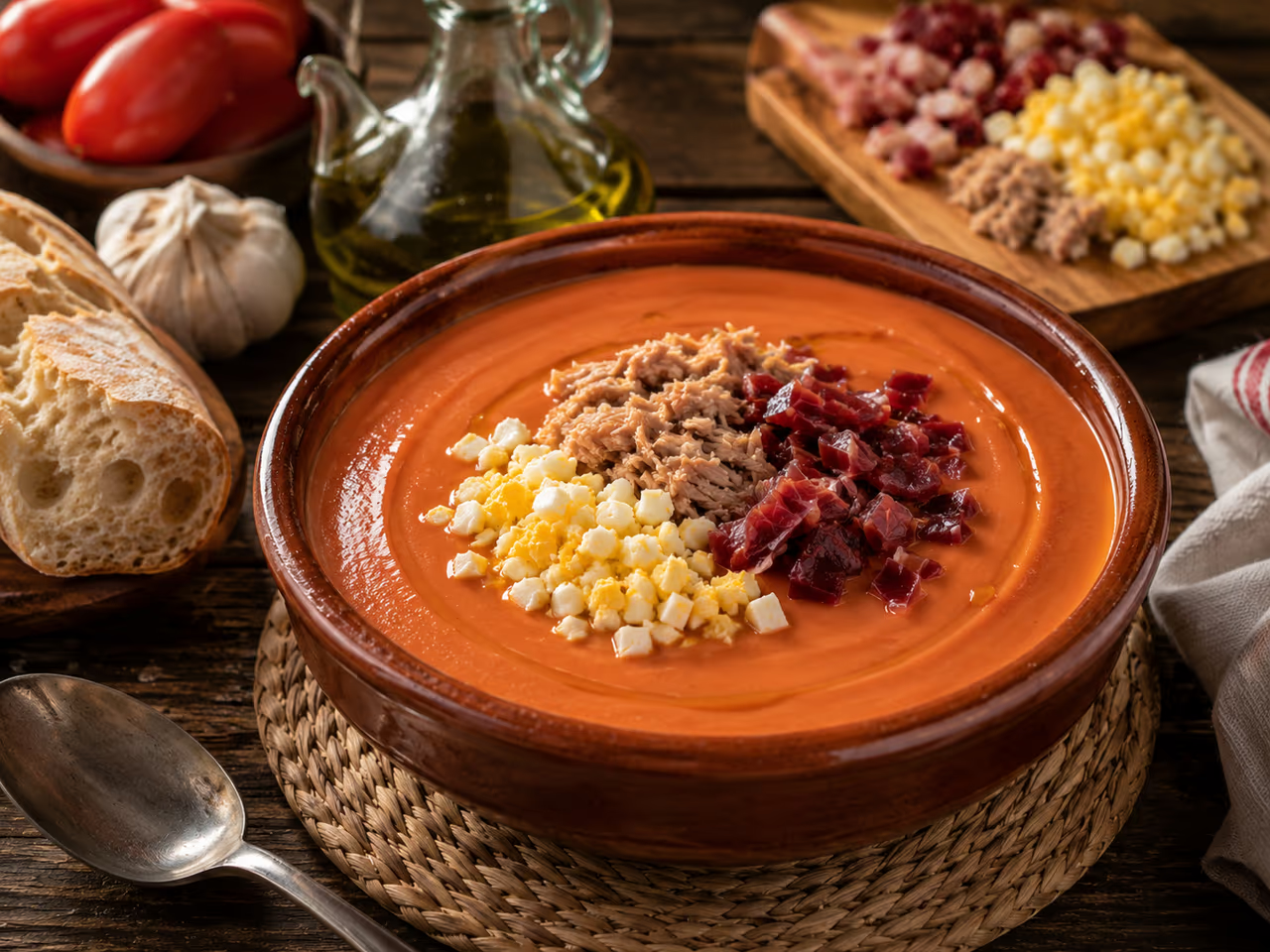
Chill and serve with chopped hard-boiled egg and ham as an optional classic garnish.
Fix my salmorejo
Select what's wrong and I'll tell you how to fix it.
Check how much bread you used: the reference is 200 g per 1 kg of prepared tomato. If you used less, add part of the difference, let it hydrate, blend and reassess. If already at that ratio, do not automatically add more.
Add blended tomato or a little very cold water, one tablespoon at a time. Don't add too much liquid at once.
Bread does not chemically neutralise acidity. Test mixing a small portion with a new base of riper tomatoes, keeping bread and oil balanced. Adjust salt only if lacking. Sugar changes sweetness rather than removing acidity.
Chilling and resting may make the flavour seem slightly more integrated, but it is not a reliable fix for too much raw garlic. If it is still overpowering, make some more salmorejo without garlic and mix it in, keeping the tomato, bread, olive oil and salt in the same proportions—not tomato alone. Next time, start with half a clove, taste and add more gradually; raw garlic tends to taste stronger when crushed very finely or made into a paste.
Taste at serving temperature. If salt is lacking, test a small pinch in a portion before seasoning the whole batch. The 1% tomato-weight reference is a starting amount, not extra salt on top of what is already there.
Do not add more oil. Test puréed ripe tomato in a portion; if it helps, add it gradually to the rest and adjust seasoning. Water dilutes flavour too. If only the texture is thick, use the texture adjustment.
If oil is already incorporated, do not automatically add more. Chill the mixture if blending warmed it and reblend a small portion. If it still separates, test blending it gradually into a new tomato-and-bread base.
The culprit is usually the tomato: not ripe enough or too much white flesh inside. Add another very red, ripe tomato and blend again. A small amount of natural tomato paste (without added sugar) can boost the colour without changing the flavour much.
Look for very ripe, fleshy tomatoes that are not too watery. In Spain, pear or vine tomatoes work especially well; elsewhere, use ripe Roma/plum tomatoes or good vine-ripened tomatoes.
For maximum precision, after. The calculator uses usable tomato: no core, and no skins or seeds if you strain it. If you need 1 kg, you should have 1 kg of clean tomato ready to blend.
Cordoban salmorejo is a thick emulsion of tomato, bread, garlic, olive oil and salt, served with a spoon and garnished with hard-boiled egg and ham. Gazpacho is a liquid cold soup containing cucumber, bell pepper and vinegar, which can be drunk from a glass and typically does not contain bread or emulsify as much oil.
Refrigerate promptly, covered, at 5 °C or below. Do not leave perishable food at room temperature for more than two hours. There is no universal shelf life for this homemade raw preparation.Storage guidance from AESAN (Spanish)
Not in the base. The traditional recipe contains tomato, bread, olive oil, garlic and salt. The chopped hard-boiled egg is a classic garnish, not an ingredient of the cream itself.
Yes, though it loses some texture when thawed: the olive oil emulsion can separate. Thaw in the fridge and blend briefly again. Best consumed fresh.
Technically yes, but it wouldn't be salmorejo: bread is what gives the characteristic dense, creamy texture. Without it, the result is closer to a thick gazpacho.
Upcoming cold soup recipes & features
Andalusian gazpacho
Ajoblanco
Porra antequerana
Restaurant mode
Tips by country
Did it turn out well?
If this calculator helped you, you can support the project by buying me a beer.
Created by Luisete from Andalusia. The calculator follows practical Cordoban salmorejo proportions with conservative adjustments: usable tomato, day-old bread, extra virgin olive oil, salt, and garlic added little by little.